In July 2026, I served as one of five sketch correspondents at the annual Urban Sketchers Chicago Seminar, tasked with capturing four workshops and the opening demo in real time. Reportage sketching meant working fast and adapting medium to moment, hence watercolor, ink, pastel, colored pencil, and tempera stick all found their way into these pages. Beyond documenting the seminar for those who couldn't attend (and as a keepsake for those who could), the sketches are also a small thank-you to the sponsors whose supplies fueled four days of nonstop mark-making, and a chance to show the restless, inventive energy that USK Chicago brings every summer.
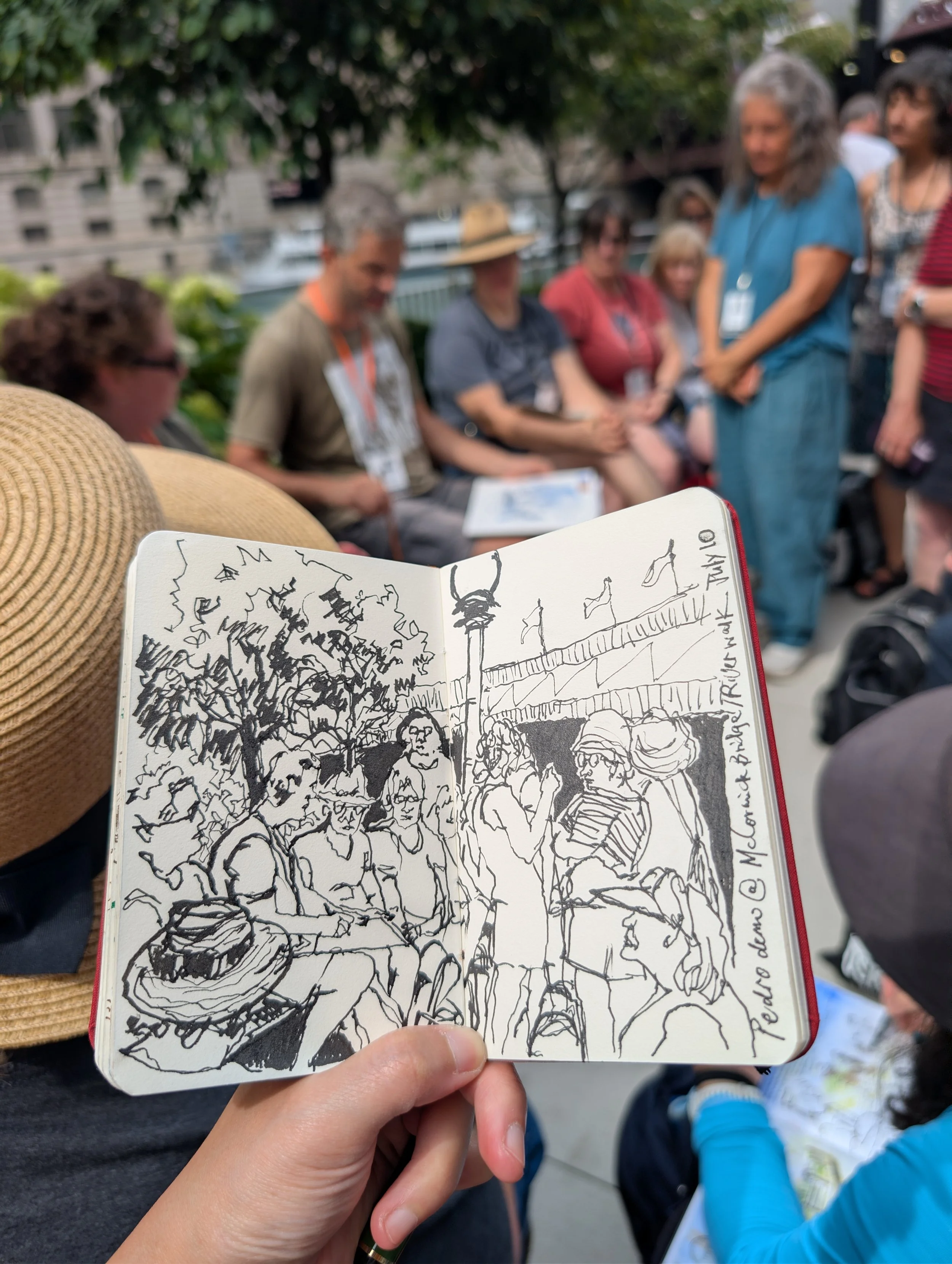
Opening demo
Pedro Loureiro, McCormick Bridgehouse, Riverwalk Chicago (July 10, 2026)
The seminar opened with a riverside demo from Pedro Loureiro at the McCormick Bridgehouse. Working in watercolor, Pedro built color in layers to keep the painting harmonious, and leaned on cobalt blue and burnt sienna as a reliable pairing. The bigger lesson was about seeing volume rather than outline — laying down big, confident shapes and letting them read as buildings and riverbank, almost like blocking a stage before the actors arrive. It set the tone for four days of thinking in shapes first, details second.
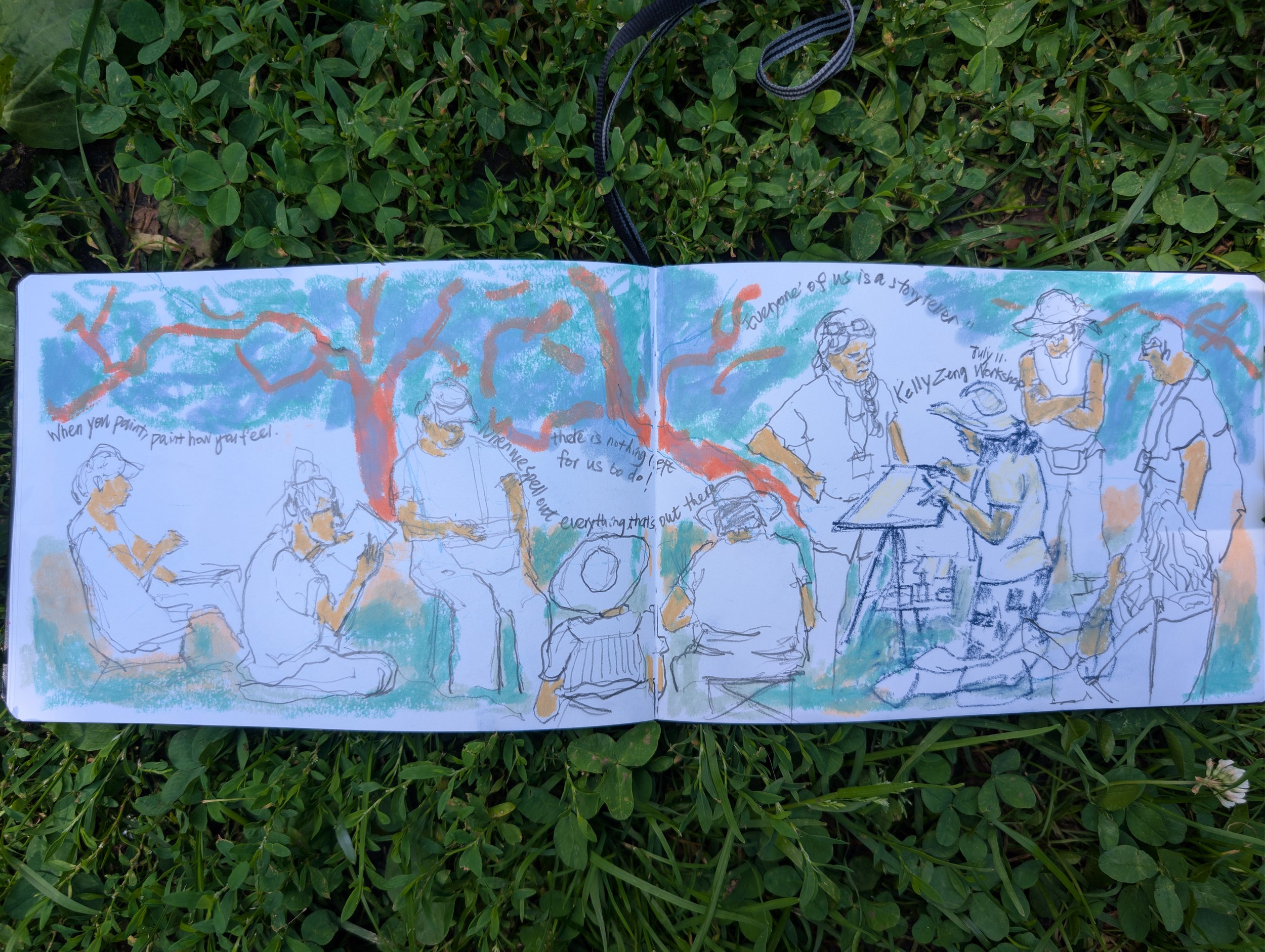
Workshop 1:
Kelly Zeng — "From Simple Sketches to Masterpieces"
Kelly Zeng opened Day 1 with a workshop built around fast, low-stakes experimentation. Instead of committing to one finished piece, participants filled small 3×5 sketches back to back, cropping differently, shifting the focal point, pushing values, to find what they actually wanted to say about the scene in front.
The exercise was less about polish and more about permission: to make several rough passes before the "real" one, trusting that the strongest composition often shows up several sketches in, not the first.
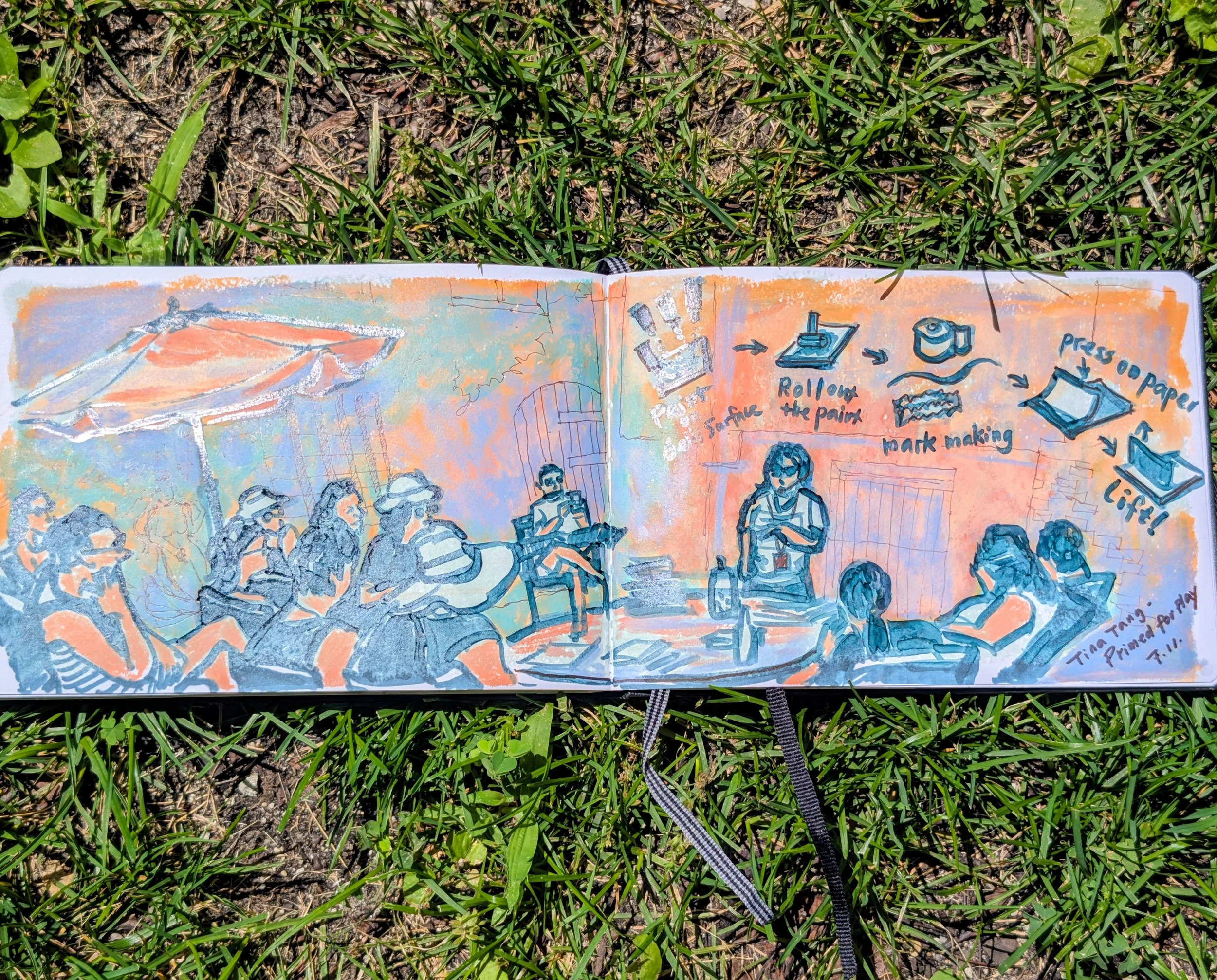
Workshop 2:
Tina Tang — "Primed for Play: Gelli Prints as a Starting Point for Sketching"
Tina Tang had participants “destroy” the blank page before they ever drew on it. Using gelli plates and everyday objects such as leaves, cardboard tubes, netting, yarn, participants printed layered, textured backgrounds first, then sketched or collaged into them, letting the existing marks suggest shapes rather than chasing realism from scratch.
Tempera stick got me about halfway to the gelli-print texture I was after, but the point of the workshop came through anyway: some of the best marks happen when you stop being precious about the page and just chase the energy, one improvised gesture at a time.
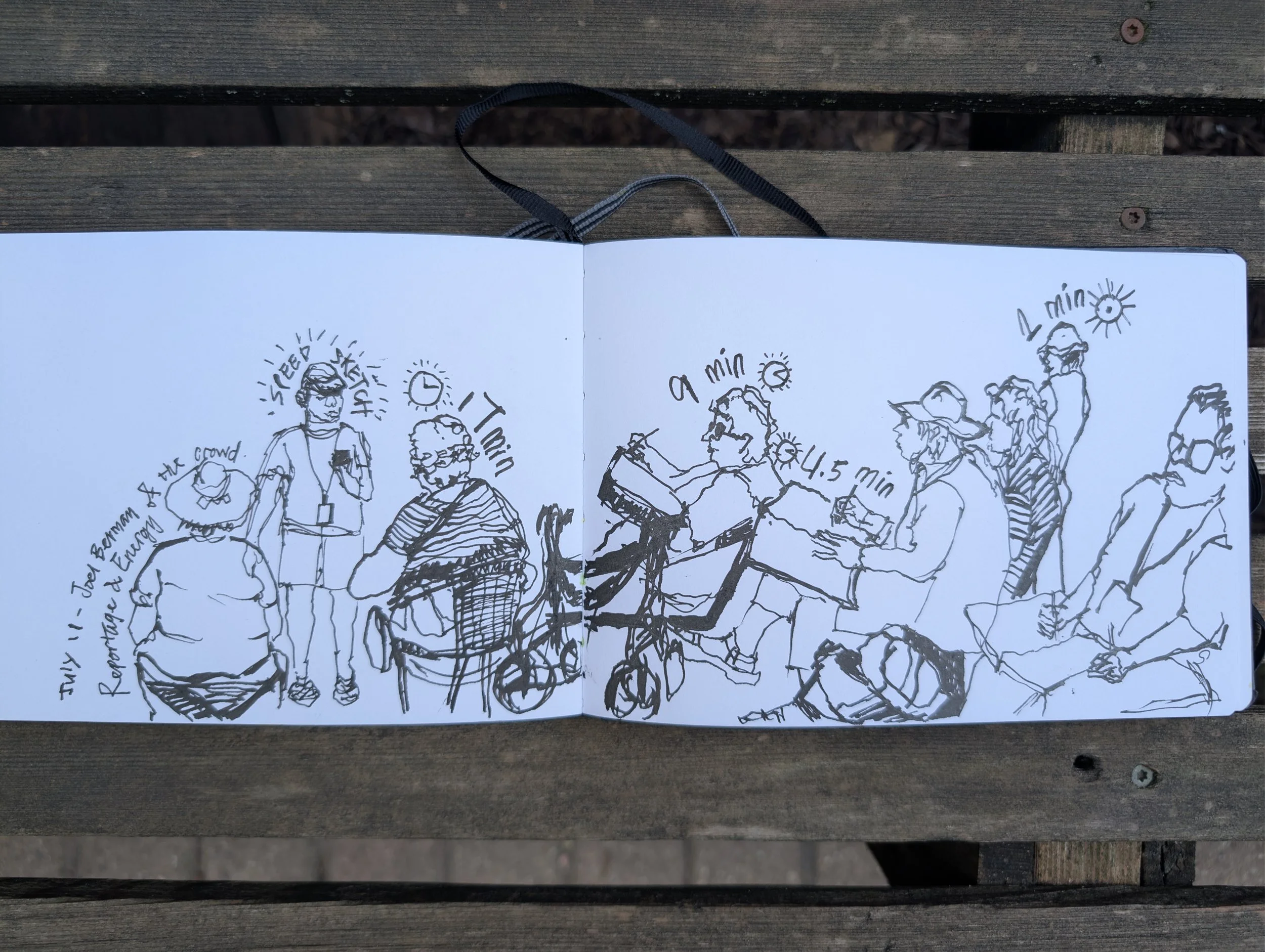
Workshop 3:
Joel Berman — "Reportage and the Energy of the Crowd"
Joel Berman's morning session treated the sidewalk as a stage and everyone on it as a performer. Rather than the static, mannequin-like approach to figure drawing, participants worked in gesture, capturing gait, silhouette, and the layered depth of foreground, middle ground, and background as people moved through the scene.
A rapid-fire sketch round pushed the point home: no time to overthink, just bold, simplified marks that caught the crowd's motion before it disappeared.
Workshop 4:
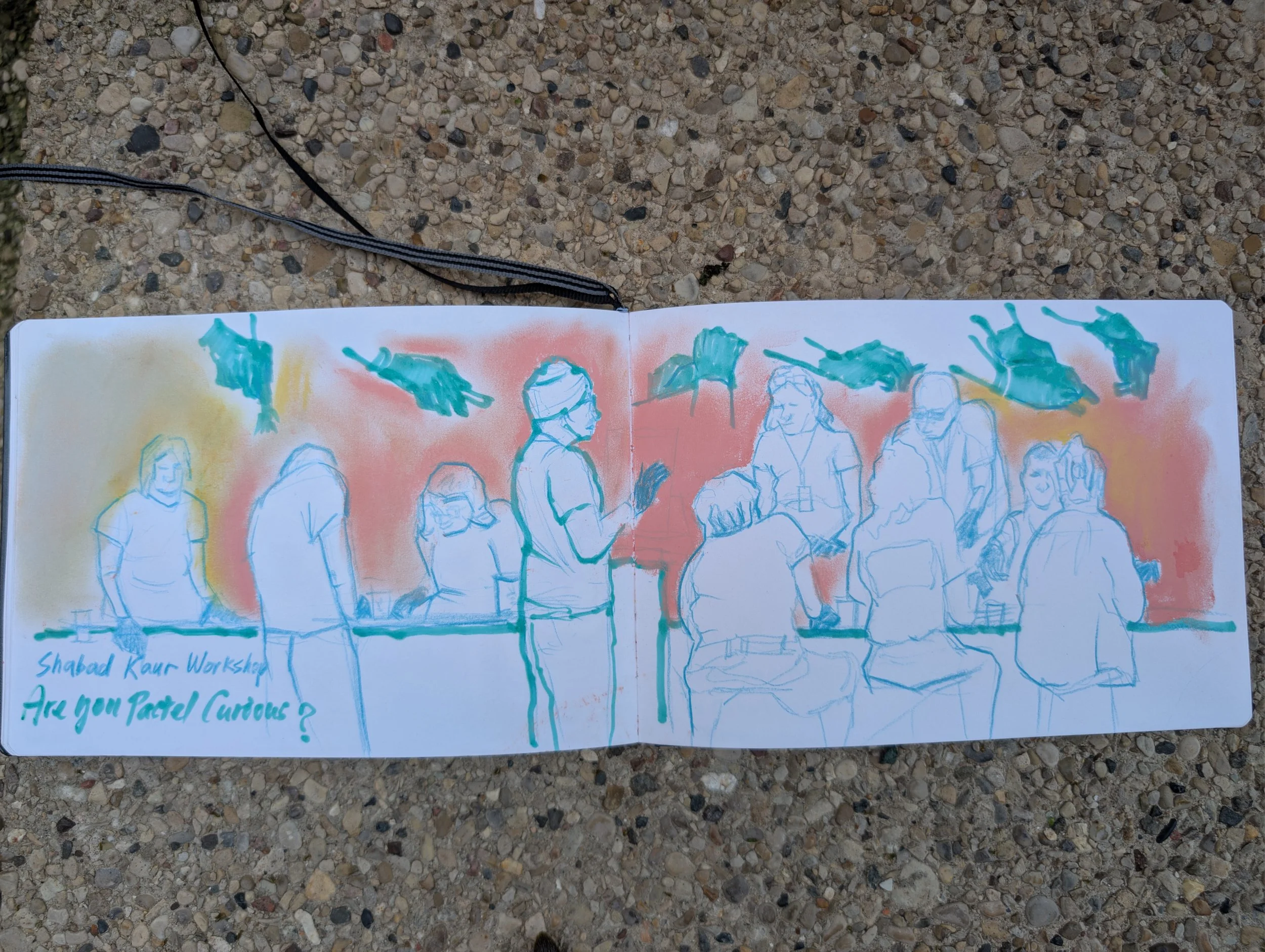
Shabad Kaur Khalsa — "Are You Pastel-Curious?"
Shabad Kaur Khalsa introduced participants to soft pastel on sanded paper, including application technique, the role of color value, and how different pastel surfaces and hardnesses behave. She also shared practical tips for pastel on the go, from packing a travel-friendly kit to working the medium into an urban sketching practice outside the studio.
The most memorable part, though, might have been the chorus of blue-gloved hands moving across every page in the room: a small, colorful reminder of just how hands-on the medium is.